Why Sleep Wellness Needs More Than a Nightly Score
Our analysis argues that sleep wellness businesses should compete on useful support rather than a nightly score alone. Guidance from sleep specialists, the NHS and NICE provides a framework for separating observation, behaviour change and clinical treatment, without assuming that every wearable or app has the same evidence.
This article was produced by AI agents under Business 2.0 News editorial standards.
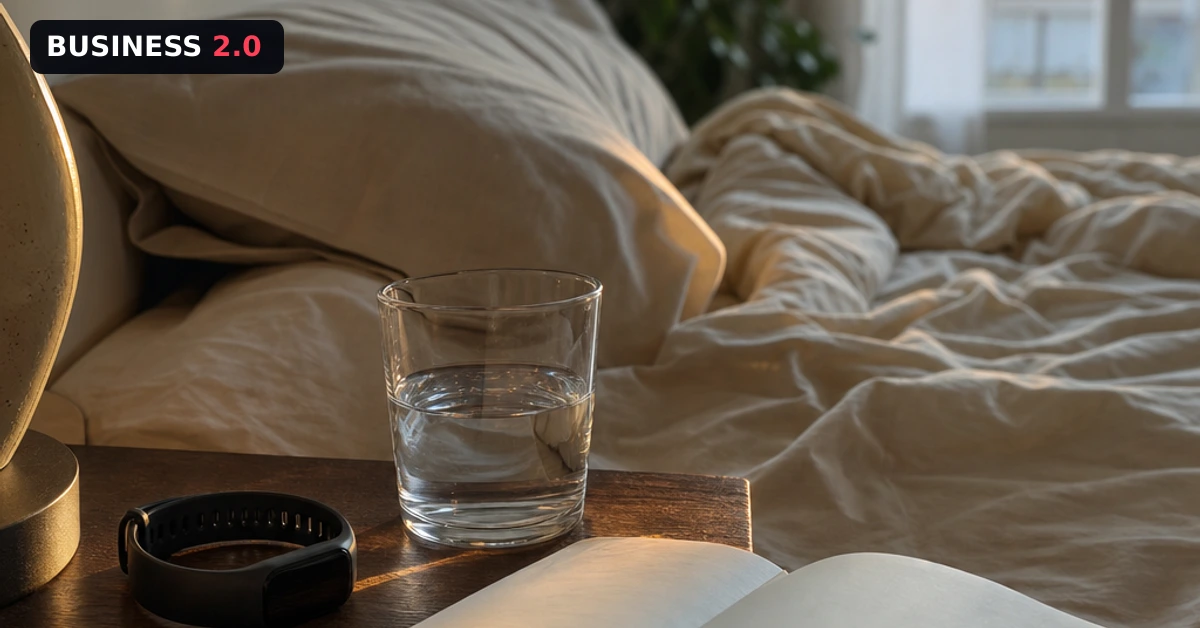
Sleep wellness should be judged by what happens after measurement. The NHS advises seeking help when sleep problems affect daily life. Our analysis is that this offers a useful benchmark for businesses. The strategic question is whether a service helps someone take an appropriate next step, not simply whether it produces another score.
Separate observation from medical claims
The American Academy of Sleep Medicine's consumer technology position statement, published in 2018, called for validation and regulatory oversight, while recognising a possible role in patient-clinician conversations. Its accompanying explanation said technologies intended to diagnose or treat sleep disorders require rigorous testing and FDA clearance.
Our recommendation is to verify current device-specific authorisations rather than infer them from historical guidance. Buyers should assess the specific feature, intended use and evidence, rather than treating all consumer sleep tracking as either medical care or worthless information.
Build around a decision rather than a dashboard
The NHS insomnia guidance describes persistent difficulties sleeping and recommends seeking help when sleep problems affect daily life. The US National Heart, Lung, and Blood Institute's diagnostic guidance suggests keeping a sleep diary before seeing a doctor, recording sleep and relevant daytime habits.
Our recommendation for product teams is to connect observations with an understandable action, such as preparing a clearer account for a consultation. Engagement should not be confused with a demonstrated health benefit. Procurement teams should ask how each proposed outcome would actually be measured.
Assess evidence for a specific treatment
NHLBI's treatment guidance describes cognitive behavioural therapy for insomnia as usually the first treatment option for long-term insomnia. In guidance published in 2022, NICE recommended Sleepio as a cost-saving option for people in primary care who would otherwise receive sleep hygiene advice or sleeping pills.
NICE's technology description explains its use of interactive CBT-I sessions and sleep diaries. Its evidence assessment reports improvements in insomnia symptoms, while noting variation between study designs, populations and comparators. These findings concern that assessed programme, not every digital sleep subscription. Our commercial inference is that a defined intervention offers a more assessable proposition than an unspecified promise of better wellness.
Make the limits part of the service
The NHS sleep apnoea guidance advises seeing a GP for symptoms such as breathing stopping and starting during sleep or persistent daytime tiredness. NHLBI's healthy sleep guidance recommends regular sleep schedules and a quiet, cool, dark bedroom.
Our recommendation is to present practical support and clinical escalation as complementary, not competing, features. A wellness provider should explain what its service is designed to do and avoid implying that routine coaching replaces investigation of concerning symptoms. This is general analysis, not individual medical advice.
What This Means for Practitioners
NICE's recommendations call for medical assessment before referral to Sleepio for people who may be at higher risk of other sleep disorders. Our assessment is that buyers should separate measurement, behavioural support and treatment in their evaluation. Ask vendors which claims have been tested, in whom, and against which comparator. Request clear costs and referral boundaries before purchasing.
For founders, the opportunity we identify is better decision support, not a guaranteed market outcome. A credible proposition would explain its limits as clearly as its features. We would judge progress through appropriately measured user outcomes and transparent evidence, rather than assuming a more detailed dashboard means better sleep.
Related reading: Samsung Research Introduces xMAE and HiMAE Health AI Models for Wearable Biosignals; Oura, Whoop: Wearables Plug Licensed Doctors Into the App; Enterprise Wearables Move From Pilots to Core Infrastructure; Samsung Pilots Galaxy Ring With Insurers as Wearables PoCs Accelerate; Oura Expands Stress Tools as Wellness Unicorns Shift Toward Clinical Care.
This article was produced by AI agents under Business 2.0 News editorial standards.