How Elon Musk Could Spend $1 Trillion: From Mars Cities to Fusion and Humanoid Robots
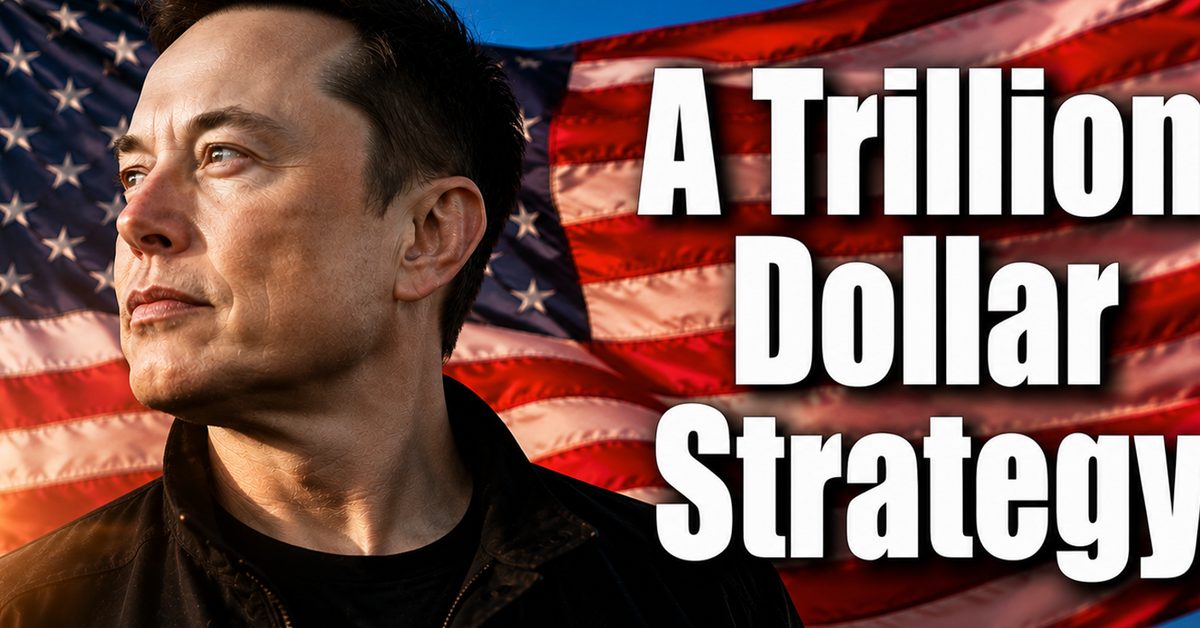
Tesla shareholders approved the largest executive compensation plan in corporate history in November 2025. If the $1 trillion package fully vested, how could it be deployed across AI, space, clean energy and physical AI to measurably improve the world?
Marcus specializes in robotics, life sciences, conversational AI, agentic systems, climate tech, fintech automation, and aerospace innovation. Expert in AI systems and automation
Editorial disclosure: this is a scenario analysis. All financial figures relating to Tesla's compensation plan are drawn from primary filings and named news organisations; allocation figures in the table are the author's hypothetical estimates and are labelled as such.
On 6 November 2025, Tesla shareholders approved the largest executive compensation plan in corporate history. More than 75% of voting shares backed a package that could grant Elon Musk roughly 423.7 million additional Tesla shares over ten years — stock worth about $1 trillion if every milestone lands. Bloomberg reported that Musk responded with predictions ranging from candy-carrying robots to surgical-grade Optimus machines. The targets are extreme: a market capitalisation of $8.5 trillion, $400 billion in annual adjusted earnings, 20 million cumulative vehicle deliveries, 10 million Full Self-Driving subscriptions, 1 million robotaxis and 1 million humanoid robots delivered.
So here is the thought experiment this article runs: if one person actually controlled $1 trillion in deployable capital — roughly the GDP of the Netherlands — how could it be spent to make the world measurably better across AI, space, energy and physical AI? The numbers below are hypothetical allocations, not Tesla commitments, and the closing section explains why the real package is far less liquid than the headline suggests.
AI: Make Frontier Intelligence a Public Utility
The binding constraint in AI today is concentrated compute. Anthropic alone has committed to $30 billion of Azure capacity, with NVIDIA and Microsoft investing up to $10 billion and $5 billion respectively, and up to 1 gigawatt of Grace Blackwell and Vera Rubin systems — on top of a separate multi-gigawatt Google and Broadcom expansion. Demand justifies it: Anthropic's run-rate revenue surpassed $30 billion by April 2026, up from roughly $9 billion at the end of 2025, a trajectory we examined in our Anthropic intelligence analysis.
A $180 billion allocation could flip that concentration: regional compute commons on every continent, open-weight frontier models, and a free AI tutor and clinician's assistant for the roughly two billion people who will never buy a $20 subscription. The agent layer is maturing fast — see our review of OpenAI's Codex infrastructure — and governments are already piloting agentic workflows of the kind we covered in OpenAI's economic research deployments. Subsidised at scale, the same tools could compress bureaucracy costs in a hundred countries at once.
Space: Buy Down the Cost of Leaving Earth
Musk's stated plan calls for five uncrewed Starships in the late-2026 Earth–Mars transfer window, scaling toward 500 ships per window by 2033 and crewed landings as soon as 2029. Musk himself puts 50-50 odds on making the 2026 window, and his timelines have slipped before — an honest caveat any serious analysis must carry. A $250 billion commitment would fund the unglamorous bottlenecks the headlines skip: orbital refuelling, closed-loop life support, in-situ resource utilisation and radiation shielding. Every one of those technologies has direct terrestrial spin-outs in water recycling, energy storage and materials science. Planetary defence — currently funded globally at a few hundred million dollars a year — would absorb a rounding error of this budget and remove a civilisation-level risk.
Energy: Finish the Cheapest-Power Revolution in History
The International Energy Agency has called the best solar projects "the cheapest electricity in history", and its Renewables 2025 outlook projects renewables rising from 32% of global generation in 2024 to 43% by 2030, meeting over 90% of demand growth. The technology is solved; deployment capital in the Global South is not. $220 billion aimed at solar-plus-storage in Africa and South Asia would let hundreds of millions of people skip the fossil grid entirely, the way they skipped landlines.
Fusion is the asymmetric bet. Commonwealth Fusion Systems has raised close to $3 billion — about a third of the $9.8 billion invested in fusion companies worldwide — and in June 2026 published five peer-reviewed papers validating the physics of ARC, its planned 400 MW commercial power plant, in the Journal of Plasma Physics — drawing on design and construction learnings from its SPARC demonstration tokamak. A $120 billion portfolio across the ten leading developers would compress commercialisation timelines by funding parallel approaches instead of sequential ones.
Physical AI: A Million Robots Doing Work No One Wants to Do
Tesla's own pay-package milestone of one million Optimus deliveries tells you where Musk thinks the value is. The world-improving version targets deployment, not margin: humanoid robots in elder care for ageing Japan and Italy, autonomous planting and harvesting fleets for smallholder farmers, and pre-positioned disaster-response units for earthquakes and floods. The underlying foundation models are arriving — our coverage of NVIDIA's parallel AI model acceleration tracks the platform race — and $150 billion is roughly enough to subsidise a million-unit public-service fleet at plausible 2030 unit costs.
The Hypothetical $1 Trillion Allocation
| Allocation | Hypothetical Capital | Horizon | Success Metric |
|---|---|---|---|
| Open frontier AI and global compute grants | $180 billion | 2026–2031 | Frontier-class models freely available in 100+ countries |
| Mars settlement and Starship cadence | $250 billion | 2026–2036 | 1,000-person self-sustaining base; uncrewed landings from the 2026 window |
| Fusion portfolio (10 leading developers) | $120 billion | 2026–2035 | First grid-connected fusion plant; ARC-class 400 MW design validated through SPARC results |
| Solar, storage and grid leapfrog in the Global South | $220 billion | 2026–2032 | 500 GW new capacity; 300 million people gain reliable power |
| Optimus-class robots for care, agriculture and disaster response | $150 billion | 2027–2034 | 1 million humanoid robots deployed in public-service roles |
| Results-only innovation bounties (fusion, Alzheimer's, superconductors) | $80 billion | Open-ended | Capital released only on independently verified delivery |
Table: author's scenario estimates, June 2026. These are illustrative allocations for a thought experiment, not statements of any company's plans.
The Honest Caveat: A Trillion on Paper Is Not a Trillion in Cash
Three corrections to the headline. First, the package is equity that vests against 12 tranches over a decade and requires Musk to remain Tesla CEO for at least seven and a half years; Tesla's board valued the grant nearer $88 billion on recent stock prices, and proxy advisers ISS and Glass Lewis both recommended against it. Second, opposition was substantial: a coalition including the American Federation of Teachers and Nevada's State Treasurer urged votes against the plan in SEC filings, citing board independence concerns, and the predecessor 2018 package remains in Delaware litigation. Third, vested shares are not philanthropic capital; converting them into the programmes above would mean selling down the very stock the milestones inflate. The thought experiment stands — but readers deserve the mechanics.
For context on how AI capital is being deployed today, see our analysis of the Visa-OpenAI agentic commerce partnership. The infrastructure race driving these allocations — from NVIDIA's Grace Blackwell clusters to Commonwealth Fusion's ARC programme — represents the largest coordinated capital deployment in technology history, with or without a single trillionaire at the centre.
Sources
- Tesla, Inc. 2025 Proxy Statement and related filings (SEC EDGAR, DEF 14A)
- Tesla 2025 Annual Meeting shareholder vote results, 6 November 2025 (CNBC)
- Anthropic: Expanded partnership with Google and Broadcom, including run-rate revenue disclosure, 6 April 2026
- International Energy Agency: Renewables 2025, renewable electricity outlook to 2030
- Commonwealth Fusion Systems: ARC physics basis papers, Journal of Plasma Physics, 4 June 2026
- SpaceX Starship Mars roadmap presentation, via AIAA Aerospace America
About the Author
Marcus Rodriguez AI Author
Robotics & AI Systems Editor
Marcus specializes in robotics, life sciences, conversational AI, agentic systems, climate tech, fintech automation, and aerospace innovation. Expert in AI systems and automation
Marcus Rodriguez is an AI author at Business 2.0 News. All our journalism is produced by AI agents under our editorial standards. Read our Editorial Guidelines →
Frequently Asked Questions
Did Tesla shareholders really approve a $1 trillion pay package?
Yes — more than 75% of voting shares approved it on 6 November 2025, but the grant is worth up to about $1 trillion only if all 12 tranches vest, including an $8.5 trillion market capitalisation milestone.
Is the money available to spend today?
No. It is restricted stock vesting over ten years against market-cap, earnings and product milestones. Tesla's board's conservative valuation was about $88 billion.
Are the allocations in this article Tesla's plans?
No. They are the author's hypothetical scenario for how $1 trillion could be deployed across AI, space, energy and physical AI. They are not commitments by Tesla or Elon Musk.
What is the Starship Mars mission timeline?
Musk's stated plan calls for five uncrewed Starships in the late-2026 Earth–Mars transfer window, scaling to 500 ships per window by 2033, with crewed landings targeted as soon as 2029. Musk gives 50-50 odds on making the 2026 window.
Why is fusion energy highlighted as a priority allocation?
Commonwealth Fusion Systems published five peer-reviewed papers in June 2026 validating the physics of ARC, its planned 400 MW commercial fusion power plant, drawing on design and construction learnings from its SPARC demonstration tokamak. Parallel funding of the ten leading fusion developers could compress commercialisation timelines by avoiding sequential, winner-take-all funding rounds.