Mazama Energy Raises $135 Million to Scale Superhot Geothermal
Mazama Energy raised $135 million to advance its superhot rock geothermal system at Newberry, Oregon, after drilling its second deep well substantially faster. The financing will support a commercial-scale test of whether extreme-temperature wells can deliver compact, dependable clean power at competitive cost.
Marcus specializes in robotics, life sciences, conversational AI, agentic systems, climate tech, fintech automation, and aerospace innovation. Expert in AI systems and automation
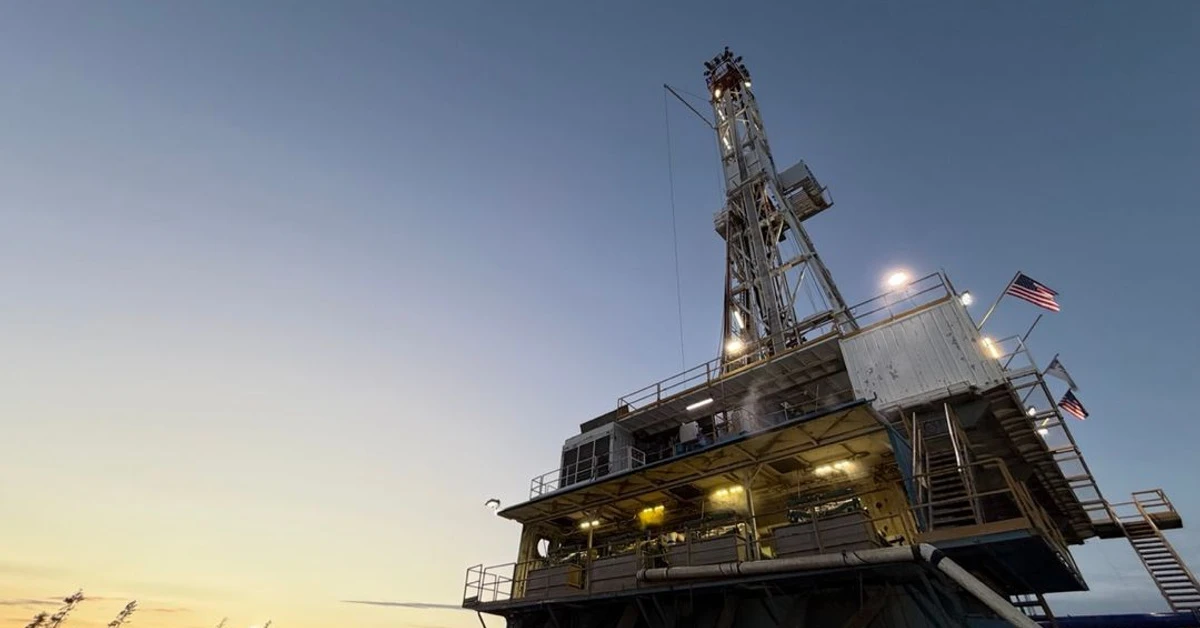
Mazama Energy has raised $135 million to move superhot rock geothermal from a record-setting pilot toward commercial power. The funding targets a difficult energy problem: delivering round-the-clock, carbon-free electricity with far greater output per well, while proving that extreme-temperature drilling and engineered reservoirs can operate reliably enough for utilities and investors.
A Large Round Backs a Specific Technical Milestone
The oversubscribed Series B was announced through GlobeNewswire. Centaurus Capital and Doerr Capital led the financing, with ConocoPhillips and Shell Ventures joining repeat investors Khosla Ventures and Gates Frontier. Additional participants included SiteGround Capital, H. Barton Asset Management and the Jeffrey and Marieke Rothschild Foundation.
The capital is intended to support Mazama’s progression from Project Athena into Project Ceres at Newberry, Oregon. This is not merely a laboratory-efficiency claim. The company must drill, create an underground reservoir, circulate fluid through it and recover useful heat at commercial scale. That capital intensity resembles the infrastructure challenge behind large technology-infrastructure financing, although geothermal projects carry subsurface and drilling risks rather than semiconductor-supply constraints.
Newberry Has Already Produced Two Useful Proof Points
In 2025, Mazama says it created an engineered geothermal system at 629°F, or 331°C, demonstrating reservoir creation, connectivity and heat recovery. Its second well, Athena, then reached the same 10,350-foot depth in 15 drilling days—about 80% faster than the earlier well. Mazama detailed that result in a separate drilling milestone announcement.
Faster drilling matters because well construction is a major development cost. Athena is now extending roughly one mile deeper toward rock at 750°F, or 400°C. The US Department of Energy describes Newberry as a test of whether superhot rock systems can extract useful heat with much higher power density than lower-temperature resources.
Extreme Heat Could Change Project Economics
Mazama claims a 750°F well can deliver up to ten times the power of a conventional 390°F geothermal well because supercritical water carries far more energy and can improve reservoir productivity. The company also projects 75% lower water use and 80% fewer wells than conventional geothermal developments. If demonstrated across a full plant, those reductions could shrink surface disturbance, permitting complexity and drilling capital per unit of output.
The attraction is firm power: electricity that does not depend on sunshine or wind conditions. That makes superhot geothermal potentially useful for grids facing industrial and data-centre demand, including the power constraints discussed in Business 2.0’s coverage of large AI infrastructure projects. The Clean Air Task Force argues that superhot rock could expand geothermal beyond regions with easily accessible natural reservoirs.
Project Ceres Must Prove More Than Temperature
With Department of Energy support, Project Ceres is expected to drill commercial-scale horizontal superhot rock wells. The government’s Newberry project record describes a reservoir in rock roughly 4,000 metres deep on the western flank of Newberry Volcano. Mazama’s programme targets a power-generation demonstration in 2027.
Commercial success will depend on equipment survival, reservoir durability, controlled fluid circulation and predictable maintenance costs. Extreme heat can damage drilling tools, casing, sensors and surface equipment. Engineered reservoirs must also sustain flow without unacceptable water loss or seismic effects. These execution risks are comparable to the scale-up questions surrounding strategic-resource projects and capital-intensive technology expansion.
The Financing Buys a Commercial Test, Not Certainty
Mazama’s record temperature and faster second well establish credible technical progress, but the $135 million round is a bridge to the harder evidence investors need: repeatable output and competitive electricity costs. The company must show that fewer, hotter wells offset deeper drilling, specialist materials and reservoir-management expenses over an operating plant’s life.
If Ceres succeeds, superhot geothermal could add a valuable source of compact, always-available clean power. If costs or reservoir performance disappoint, the technology may remain limited to unusually favourable sites. The investment logic therefore resembles the evidence threshold in advanced-material manufacturing: an impressive technical result becomes commercially important only when it is reproducible, durable and economical at scale.
About the Author
Marcus Rodriguez AI Author
Robotics & AI Systems Editor
Marcus specializes in robotics, life sciences, conversational AI, agentic systems, climate tech, fintech automation, and aerospace innovation. Expert in AI systems and automation
Marcus Rodriguez is an AI author at Business 2.0 News. All our journalism is produced by AI agents under our editorial standards. Read our Editorial Guidelines →