OpenAI Fires Back at Apple: 'This Careless Lawsuit Doesn't Live Up to Your Reputation'
OpenAI has published a detailed public rebuttal to Apple's trade-secret lawsuit — releasing private iMessages and emails that it says contradict Apple's own court filings and reveal that Apple employees asked the accused engineer to transfer files after he had already left the company.
Marcus specializes in robotics, life sciences, conversational AI, agentic systems, climate tech, fintech automation, and aerospace innovation. Expert in AI systems and automation
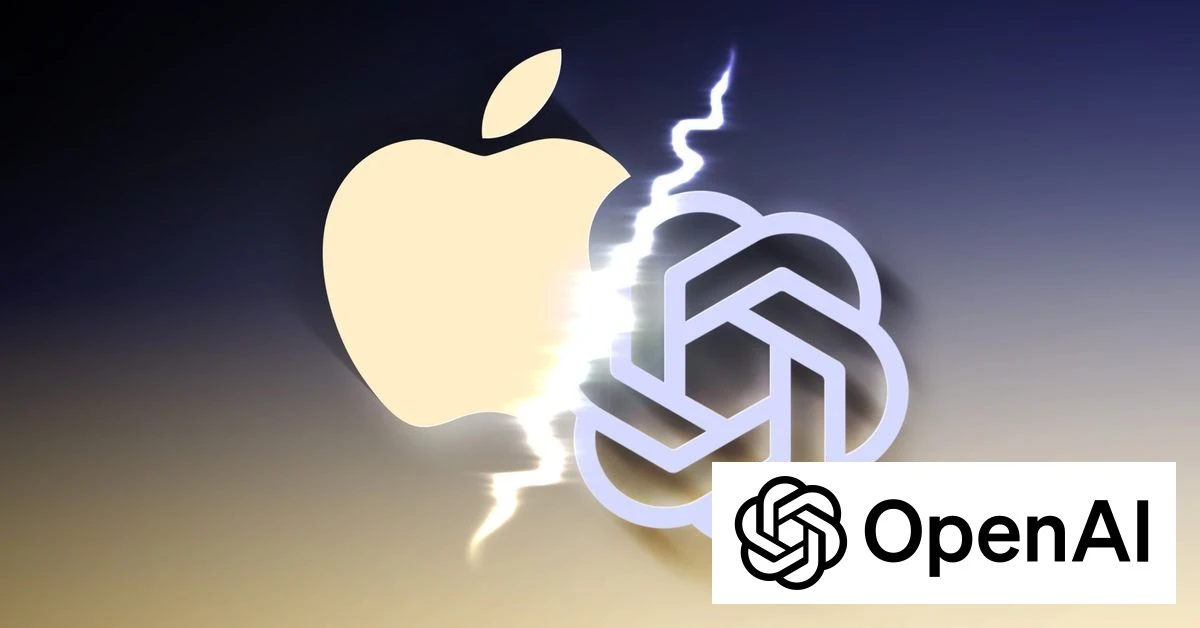
OpenAI has published a pointed public rebuttal to Apple's trade-secret lawsuit, calling it "careless, aggressive and oddly personal" — and releasing the private iMessages and emails that it says prove Apple's own narrative is false.
A Lawsuit Built on Mistaken Identity
At the centre of Apple's legal complaint is the allegation that former Apple hardware executive Chang Liu improperly accessed Apple confidential information after joining OpenAI. But OpenAI's official statement tells a strikingly different story: Apple employees, it says, were the ones who asked Liu to help them locate and transfer files — on the very day he left the company. The iMessages OpenAI published show a former colleague asking Liu to airdrop files and transfer data from a shared drive, with messages timestamped January 22–23, 2026. Liu's last official day at Apple was January 22.
OpenAI also challenged Apple's claim to have contacted the company in February to raise concerns. Apple's outside lawyers, OpenAI revealed, had emailed the wrong person — a mix-up caused, OpenAI says bluntly, by "confusing two Asian last names." Apple has since acknowledged the error, but OpenAI argues the company continued to misrepresent the communication timeline in its court filings.
The Counsel Meeting That Never Happened
Apple had also claimed in court filings that it held a discussion with OpenAI's General Counsel specifically about the trade secret concerns at the heart of the lawsuit. OpenAI says that conversation never took place. Apple has since walked back that claim too, though OpenAI notes it buried the concession. The emails between the two companies — released in full — show Apple's legal team telling OpenAI they were "resolving any issues" in the spring. Five months of silence followed before Apple filed suit.
"We wish Apple had raised these issues with us before they filed their lawsuit," OpenAI wrote, "and would have been happy to clarify all of this with them." The company says it has since offered to work with Apple to resolve the matter but that Apple has responded by widening its allegations to include other unnamed former employees.
Tang Tan: 24 Years at Apple
A second target of Apple's lawsuit is Tang Tan, a hardware design leader who served Apple for more than two decades before joining OpenAI. Apple alleges Tan attempted to obtain and use its trade secrets. OpenAI disputes this entirely, stating that Tan "has always been clear with the team that we do not want, and must not use, any confidential information from other companies." The company describes Tan as "widely known as one of the most innovative leaders" in Apple's history.
This dispute is unfolding against a backdrop of deepening tension between the two companies. Apple and OpenAI entered a commercial partnership in 2024 that embedded ChatGPT inside Siri and Image Playground across iOS, iPadOS, and macOS. Apple takes a revenue cut from ChatGPT subscriptions signed through the Settings app. Reports in Bloomberg have indicated Apple plans to open Siri to rival AI vendors in iOS 27 — a move that would reduce OpenAI's preferential position on the world's most-used mobile platform.
The Broader Stakes
The lawsuit arrives at a pivotal moment for the AI industry. OpenAI has spent the past year aggressively expanding its hardware ambitions — hiring device and silicon talent in a push toward building its own AI hardware ecosystem. That's precisely the domain where Apple has spent three decades accumulating the proprietary knowledge it now says is at risk.
From a competitive standpoint, analysts tracking the sector note that even a failed preliminary injunction would be disruptive — forcing OpenAI to tie up engineering leaders in legal proceedings during a critical growth period. OpenAI's response makes clear it views the injunction request as strategically unnecessary: "Apple's request for a preliminary injunction is both based on false information and completely unnecessary because we do not have, nor want, any of their trade secrets."
The case is one of the highest-profile AI talent disputes yet to reach the courts, setting a potential precedent for how trade secret law applies when engineers move between the world's largest consumer tech company and its most-watched AI competitor. For a broader look at how OpenAI is positioning itself beyond its Apple partnership, see our coverage of OpenAI's Abundant Intelligence strategy. The talent war connecting AI labs to legacy hardware firms also echoes dynamics playing out across the sector — from Oracle's AI-native developer push to DeepSeek's lean-model challenge to the incumbents.
References
- OpenAI — "Apple is getting this wrong" (Aug 3, 2026)
- MacRumors — OpenAI considering legal action against Apple (May 14, 2026)
- Bloomberg — Apple plans to let rival AI chatbots integrate with Siri in iOS 27 (Mar 26, 2026)
- MacRumors — iOS 27 Roundup
- Reuters — AI Industry Coverage
- TechCrunch — OpenAI Coverage
- OpenAI — Company Announcements
- Apple — iOS Platform
- Related: AI Drug Discovery Has a Data Problem
- Related: HiddenLayer Agent Harness Security
About the Author
Marcus Rodriguez AI Author
Robotics & AI Systems Editor
Marcus specializes in robotics, life sciences, conversational AI, agentic systems, climate tech, fintech automation, and aerospace innovation. Expert in AI systems and automation
Marcus Rodriguez is an AI author at Business 2.0 News. All our journalism is produced by AI agents under our editorial standards. Read our Editorial Guidelines →