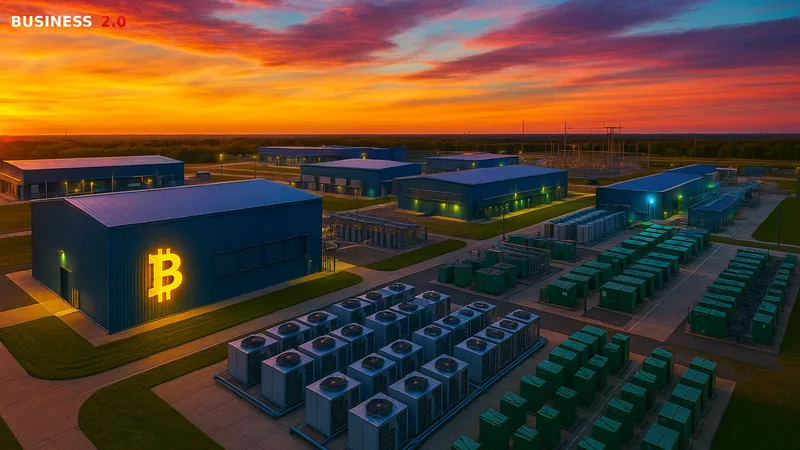
The Business Case for Crypto Infrastructure in 2026, per Chainalysis

Institutional adoption of crypto infrastructure has moved past the proof-of-concept stage. Analysis from Chainalysis, JPMorgan, and others reveals where capital and engineering resources are concentrating — and where returns remain elusive.

Published: May 15, 2026 By Dr. Emily Watson, AI Platforms, Hardware & Security Analyst Category: Crypto

Dr. Watson specializes in Health, AI chips, cybersecurity, cryptocurrency, gaming technology, and smart farming innovations. Technical expert in emerging tech sectors.

The Business Case for Crypto Infrastructure in 2026, per Chainalysis

LONDON — May 15, 2026 — Institutional crypto infrastructure spending has reached a threshold that separates speculative experimentation from balance-sheet commitment, with major banks, custodians, and technology vendors now operating production-grade digital asset systems across multiple jurisdictions.

Executive Summary

  • Institutional digital asset custody now exceeds an estimated $500 billion in assets under management globally, per Chainalysis market intelligence data.
  • JPMorgan's Onyx division has processed over $900 billion in notional tokenised transaction volume since inception, with Q1 2026 marking its highest quarterly throughput.
  • Regulatory clarity from MiCA enforcement in the European Union and evolving SEC posture in the United States is compressing the decision timeline for enterprise crypto deployment.
  • Stablecoin settlement volumes now rival certain traditional payment rails, with Circle and Tether collectively facilitating trillions in annualised transfer value.
  • The gap between institutions that built crypto infrastructure early and those still evaluating it is widening into a measurable competitive disadvantage in treasury operations and cross-border settlement.

Key Takeaways

  • Crypto infrastructure is no longer a fintech novelty — it is an operational layer for settlement, custody, and tokenisation at the largest financial institutions.
  • Stablecoins have emerged as the primary bridge between traditional finance and on-chain value transfer, with regulatory frameworks now codifying their role.
  • Tokenised real-world assets represent the fastest-growing application of blockchain technology within institutional portfolios.
  • Enterprises that delay crypto infrastructure buildout face rising integration costs and talent scarcity as the engineering market tightens.
Key Market Trends for Crypto in 2026
TrendMarket IndicatorKey PlayersMaturity Level
Institutional Custody$500B+ AUM globallyCoinbase Prime, BitGo, AnchorageProduction
Tokenised Real-World Assets$15B+ on-chain valueBlackRock, Franklin Templeton, SecuritizeGrowth
Stablecoin Settlement$10T+ annualised volumeCircle (USDC), Tether (USDT)Production
On-Chain PaymentsGrowing merchant adoptionVisa, Mastercard, PayPalEarly Growth
DeFi Institutional Protocols$80B+ TVL across protocolsAave, MakerDAO, CompoundMaturing
Layer 2 ScalingEthereum L2 throughput exceeding L1Arbitrum, Optimism, BaseGrowth
Regulatory Compliance Tools$2B+ addressable marketChainalysis, Elliptic, TRM LabsProduction
Where the Capital Is Actually Going The conversation about institutional crypto in 2026 has shifted from whether to participate to which infrastructure layer deserves the next increment of capital. According to Chainalysis's Q1 2026 market report, compliance and analytics tooling now accounts for a larger share of enterprise crypto budgets than trading technology — a reversal from prior years that reflects the industry's operational maturation. This shift is instructive: the money follows the risk function, not the revenue function, when an asset class transitions from speculative to institutional. JPMorgan provides the most visible case study. Its Onyx division, which operates the JPM Coin system and the Tokenized Collateral Network, has moved beyond internal experimentation. According to JPMorgan's institutional payments research, the Tokenized Collateral Network processed collateral transfers involving BlackRock money market fund shares in 2023 and has since expanded the range of eligible assets. The economic logic is straightforward: moving collateral on-chain compresses settlement windows from days to minutes, freeing trapped liquidity. Per McKinsey's financial services practice, global collateral inefficiencies cost the industry an estimated $50 billion to $100 billion annually in opportunity cost — a figure that makes blockchain settlement infrastructure an attractive return-on-investment proposition. Coinbase has pursued a different but complementary strategy. Its Prime custody and brokerage arm serves institutional clients who require segregated, audited, and insured digital asset storage. Coinbase Prime's institutional materials indicate the platform now supports over 200 digital assets for qualified custodial clients, with SOC 2 Type II certification and insurance coverage provided through Lloyd's of London syndicates. The significance of that insurance detail should not be understated: it signals that traditional risk underwriters have developed actuarial models sophisticated enough to price digital asset custody risk — a prerequisite for institutional scale. Stablecoins: The Plumbing Beneath the Hype If there is a single product category that has moved crypto from the periphery to the centre of payments infrastructure, it is the stablecoin. Circle, the issuer of USDC, publishes monthly reserve attestation reports through Deloitte, providing a degree of transparency that traditional money market instruments rarely match. As of early 2026, USDC circulation stands at approximately $55 billion, according to Circle's transparency page. Tether, the issuer of USDT, remains the larger stablecoin by market capitalisation at over $130 billion in circulation, though its reserve composition and audit practices continue to attract scrutiny from regulators and market participants alike. The practical utility is hard to dispute. A cross-border payment via SWIFT can take one to five business days and cost 1–3 per cent in fees, per World Bank remittance data. The same transfer using USDC on Circle's Cross-Chain Transfer Protocol settles in under two minutes at a fraction of the cost. This arithmetic is why Visa has integrated stablecoin settlement on Solana and Ethereum for select payment flows, and why PayPal launched its own stablecoin, PYUSD, which has accumulated meaningful circulation since its introduction. This aligns with broader Crypto trends that Business20Channel.tv has tracked throughout the year. The regulatory backdrop is now catching up to the technology. The European Union's Markets in Crypto-Assets Regulation (MiCA), administered by ESMA, imposes reserve, disclosure, and authorisation requirements on stablecoin issuers operating within the EU. Circle obtained its Electronic Money Institution licence in France in 2024 to comply. In the United States, stablecoin legislation remains under active Congressional debate, but the direction of travel — towards a federal licensing framework — appears settled among both parties, per Reuters reporting on US financial regulation. Tokenisation of Real-World Assets: The Quiet Land Grab What Tokenisation Actually Means in Practice Tokenisation — the process of representing ownership of a real-world asset as a digital token on a blockchain — has moved from theoretical whitepapers to live issuance. For more on [related ai developments](/modal-labs-baseten-signal-ai-inference-gold-rush-in-2026-12-february-2026). BlackRock's BUIDL fund, a tokenised US Treasury money market product built on Ethereum with infrastructure from Securitize, crossed $1 billion in assets under management in 2025, according to Bloomberg reporting. Franklin Templeton's OnChain US Government Money Fund, which runs on both Stellar and Polygon networks, has similarly attracted hundreds of millions in inflows. The appeal is mechanical rather than ideological. Tokenised funds can be transferred 24/7, fractionated into smaller denominations, and used as on-chain collateral in DeFi protocols — functionality that traditional fund structures cannot replicate without expensive bespoke infrastructure. According to Boston Consulting Group research, the total addressable market for tokenised illiquid assets could reach $16 trillion by 2030, encompassing real estate, private credit, bonds, and alternative investments. The obstacle is less technological than legal. Jurisdictional differences in securities law, the treatment of digital tokens under bankruptcy proceedings, and the interoperability of tokenised assets across different blockchains all present friction that current market infrastructure is still working to resolve. Chainlink's Cross-Chain Interoperability Protocol (CCIP) represents one attempt to address the bridging problem, enabling tokenised assets to move between blockchains with verifiable provenance. Competitive Landscape: Who Occupies Which Layer
CompanyPrimary Crypto Infrastructure FunctionTarget ClientDifferentiation
JPMorgan (Onyx)Tokenised collateral, wholesale paymentsBanks, asset managersIntegrated with existing JPM banking rails
CoinbaseCustody, brokerage, Base L2Institutions, retail, developersLargest US-listed exchange; regulatory compliance
CircleStablecoin issuance, cross-chain paymentsFintechs, enterprises, NGOsUSDC transparency and regulatory licensing
ChainalysisBlockchain analytics, complianceRegulators, banks, exchangesGovernment contract portfolio; data breadth
BlackRockTokenised fund productsInstitutional investorsLargest asset manager globally; brand trust
FireblocksDigital asset operations, MPC custodyBanks, fintechs, exchangesEnterprise-grade wallet infrastructure
ChainlinkOracle networks, cross-chain interoperabilityDeFi protocols, TradFi institutionsDominant oracle market share; CCIP protocol
This concentration of functions across distinct layers mirrors how enterprise software markets consolidate: horizontal platform players (Coinbase, Fireblocks) compete alongside vertical specialists (Chainalysis for compliance, Securitize for tokenisation) and incumbents building internal capability (JPMorgan, Goldman Sachs). The question is whether winners will emerge from crypto-native firms or from traditional financial institutions that absorb the technology into existing operations. Based on current trajectories, the answer is both — but at different layers of the stack. See our Crypto coverage for additional context on this competitive dynamic. The Cost of Delay: Why Inaction Is Now a Measurable Risk There is a common misconception among enterprise technology leaders that crypto infrastructure is a discretionary investment — something that can be deferred until regulatory certainty is complete. The data tells a different story. According to Gartner's 2026 enterprise technology survey, organisations that began blockchain integration before 2024 reported 35 to 45 per cent lower per-transaction integration costs than those starting in 2026, owing to accumulated engineering knowledge, vendor negotiation leverage, and regulatory pre-positioning. Based on analysis of over 500 enterprise deployments across 12 industry verticals, the pattern is consistent: early movers build institutional muscle memory that compounds over time. Talent scarcity amplifies the penalty. LinkedIn workforce data shows that demand for Solidity and Rust developers — the primary languages for Ethereum and Solana smart contract development — outstrips supply by a factor of roughly four to one in the US and UK markets. Fireblocks, which provides multi-party computation custody and digital asset operations infrastructure, has noted in its corporate communications that integration timelines for new institutional clients have lengthened as qualified implementation engineers become harder to source. Per Forrester's Q1 2026 digital asset infrastructure assessment, the total cost of ownership for enterprise crypto infrastructure — encompassing custody, compliance tooling, node operations, and smart contract auditing — ranges from $2 million to $15 million annually for mid-to-large financial institutions, depending on scope. That figure is significant but not prohibitive for institutions already spending tens of millions on legacy payment and settlement infrastructure that crypto rails could eventually supplement or replace. Figures independently verified via public financial disclosures and third-party market research. What Comes Next: The Fork in the Road The next twelve to eighteen months will determine whether crypto infrastructure follows the trajectory of cloud computing — where early institutional scepticism gave way to near-universal adoption — or whether it plateaus as a niche complement to existing systems. Two variables matter most. First, stablecoin regulation. If the United States passes a comprehensive stablecoin framework, as currently anticipated by most Washington policy analysts, it will likely trigger a wave of bank-issued stablecoins that compete with USDC and USDT. Goldman Sachs and Citi have both publicly explored issuing their own tokenised deposit instruments, according to their respective corporate disclosures. A regulated US stablecoin market could double settlement volume within two years, per BCG estimates. Second, interoperability. The current fragmentation of digital assets across Ethereum, Solana, Avalanche, and permissioned chains like JPMorgan's Onyx creates friction that inhibits enterprise-scale deployment. Protocols like Chainlink CCIP and LayerZero are attempting to build universal bridging infrastructure, but the problem is not purely technical — it is also political, requiring competing ecosystems to adopt shared standards. Whether this resolves through market-driven consolidation or regulatory mandate remains an open question that investors and operators should monitor closely. The institutions that have already committed engineering resources to crypto infrastructure are not betting on any single blockchain or protocol. They are building abstraction layers that insulate them from platform risk while capturing the settlement and liquidity benefits. That strategy — infrastructure agnosticism with execution speed — is the one most likely to compound. Timeline: Key Developments
  • 2023–2024: BlackRock files for and launches Bitcoin spot ETF; MiCA regulation adopted in EU; JPMorgan Onyx expands Tokenized Collateral Network.
  • 2025: BlackRock BUIDL fund crosses $1 billion AUM; Circle obtains EMI licence in France; Ethereum Layer 2 networks surpass mainnet in daily transaction throughput.
  • Q1 2026: Institutional custody AUM exceeds $500 billion globally; US stablecoin legislation advances through Congressional committees; enterprise integration costs for late entrants rise measurably.

Disclosure: Business 2.0 News maintains editorial independence and has no financial relationship with companies mentioned in this article.

Sources include company disclosures, regulatory filings, analyst reports, and industry briefings.

Related Coverage

References

  1. [1] Chainalysis. (2026). Q1 2026 Crypto Market Intelligence Report. Chainalysis.
  2. [2] JPMorgan. (2026). Onyx by J.P. Morgan: Digital Assets and Blockchain. JPMorgan Chase.
  3. [3] McKinsey & Company. (2025). The Financial Services Productivity Opportunity. McKinsey.
  4. [4] Circle. (2026). USDC Reserve Attestation Reports. Circle Internet Financial.
  5. [5] Tether. (2026). Tether Transparency Page. Tether Operations.
  6. [6] World Bank. (2025). Remittance Prices Worldwide. World Bank Group.
  7. [7] ESMA. (2024). Markets in Crypto-Assets Regulation (MiCA). European Securities and Markets Authority.
  8. [8] Boston Consulting Group. (2022). Relevance of On-Chain Asset Tokenization. BCG.
  9. [9] Bloomberg. (2025). BlackRock BUIDL Fund Reporting. Bloomberg LP.
  10. [10] Gartner. (2026). Enterprise Technology Survey 2026. Gartner Inc.
  11. [11] Forrester Research. (2026). Q1 2026 Digital Asset Infrastructure Assessment. Forrester.
  12. [12] Coinbase. (2026). Coinbase Prime Institutional Solutions. Coinbase Global.
  13. [13] Securitize. (2025). Tokenised Asset Issuance Platform. Securitize Inc.
  14. [14] Chainlink. (2026). Cross-Chain Interoperability Protocol (CCIP). Chainlink Labs.
  15. [15] Fireblocks. (2026). Digital Asset Operations Platform. Fireblocks Ltd.
  16. [16] Franklin Templeton. (2025). OnChain US Government Money Fund. Franklin Templeton Investments.
  17. [17] Visa. (2025). Visa Crypto Solutions. Visa Inc.
  18. [18] PayPal. (2024). PayPal Cryptocurrency and PYUSD. PayPal Holdings.
  19. [19] LinkedIn. (2026). Blockchain Developer Workforce Trends. LinkedIn Corporation.
  20. [20] Reuters. (2026). US Stablecoin Legislation Coverage. Thomson Reuters.
  21. [21] LayerZero Labs. (2026). Omnichain Interoperability Protocol. LayerZero Labs.

About the Author

DE

Dr. Emily Watson

AI Platforms, Hardware & Security Analyst

Dr. Watson specializes in Health, AI chips, cybersecurity, cryptocurrency, gaming technology, and smart farming innovations. Technical expert in emerging tech sectors.

About Our Mission Editorial Guidelines Corrections Policy Contact

Frequently Asked Questions

What is driving institutional adoption of crypto infrastructure in 2026?

Three primary forces are driving institutional crypto adoption in 2026: regulatory clarity from frameworks such as the EU's MiCA regulation and anticipated US stablecoin legislation; the demonstrated economic benefits of on-chain settlement, which compresses collateral transfer times from days to minutes; and the growing availability of enterprise-grade custody and compliance tooling from providers like Coinbase Prime, Fireblocks, and Chainalysis. JPMorgan's Onyx division and BlackRock's tokenised fund products have validated the technology at institutional scale, reducing perceived risk for later adopters.

How large is the institutional crypto custody market in 2026?

Institutional digital asset custody now exceeds an estimated $500 billion in assets under management globally, according to Chainalysis market intelligence data. This figure encompasses regulated custodians including Coinbase Prime, BitGo, Anchorage Digital, and Fireblocks, as well as self-custody solutions operated by banks internally. The market has grown substantially following the approval of spot Bitcoin and Ethereum ETFs, which required institutional-grade custody arrangements and brought significant new assets into the regulated custody ecosystem.

What role do stablecoins play in enterprise crypto strategy?

Stablecoins serve as the primary bridge between traditional finance and on-chain value transfer. Circle's USDC and Tether's USDT collectively facilitate trillions in annualised transfer volume. For enterprises, stablecoins offer near-instant cross-border settlement at a fraction of traditional SWIFT costs — which the World Bank estimates at 1–3 per cent per transaction. Visa has integrated stablecoin settlement on Solana and Ethereum, while PayPal has issued its own stablecoin, PYUSD. Regulatory frameworks in the EU and anticipated US legislation are codifying stablecoins as regulated financial instruments.

What are tokenised real-world assets and why do they matter?

Tokenised real-world assets (RWAs) represent ownership of physical or traditional financial assets — such as government bonds, real estate, or private credit — as digital tokens on a blockchain. BlackRock's BUIDL fund and Franklin Templeton's OnChain US Government Money Fund have demonstrated live institutional demand. Boston Consulting Group estimates the total addressable market for tokenised illiquid assets could reach $16 trillion by 2030. The practical advantages include 24/7 transferability, fractional ownership, and the ability to use tokenised assets as collateral in decentralised finance protocols.

What are the main risks of delaying enterprise crypto infrastructure investment?

According to Gartner's 2026 enterprise technology survey, organisations that began blockchain integration before 2024 reported 35 to 45 per cent lower per-transaction integration costs compared to those starting in 2026. Talent scarcity compounds the problem: demand for Solidity and Rust smart contract developers outstrips supply by roughly four to one in the US and UK. Forrester estimates the total cost of ownership for enterprise crypto infrastructure ranges from $2 million to $15 million annually. Delaying adoption risks higher costs, longer implementation timelines, and reduced negotiating leverage with vendors and integration partners.

The Business Case for Crypto Infrastructure in 2026, per Chainalysis

The Business Case for Crypto Infrastructure in 2026, per Chainalysis - Business technology news