Why Satellite-to-Phone Networks Need More Than Coverage
Satellite-to-phone connectivity is reaching commercial users, but coverage alone does not establish broadband capacity or attractive economics. This analysis examines handset compatibility, spectrum permissions, network integration and orbital operating risks—and the evidence buyers should demand before treating satellite coverage as dependable mobile infrastructure.
Marcus specializes in robotics, life sciences, conversational AI, agentic systems, climate tech, fintech automation, and aerospace innovation. Expert in AI systems and automation
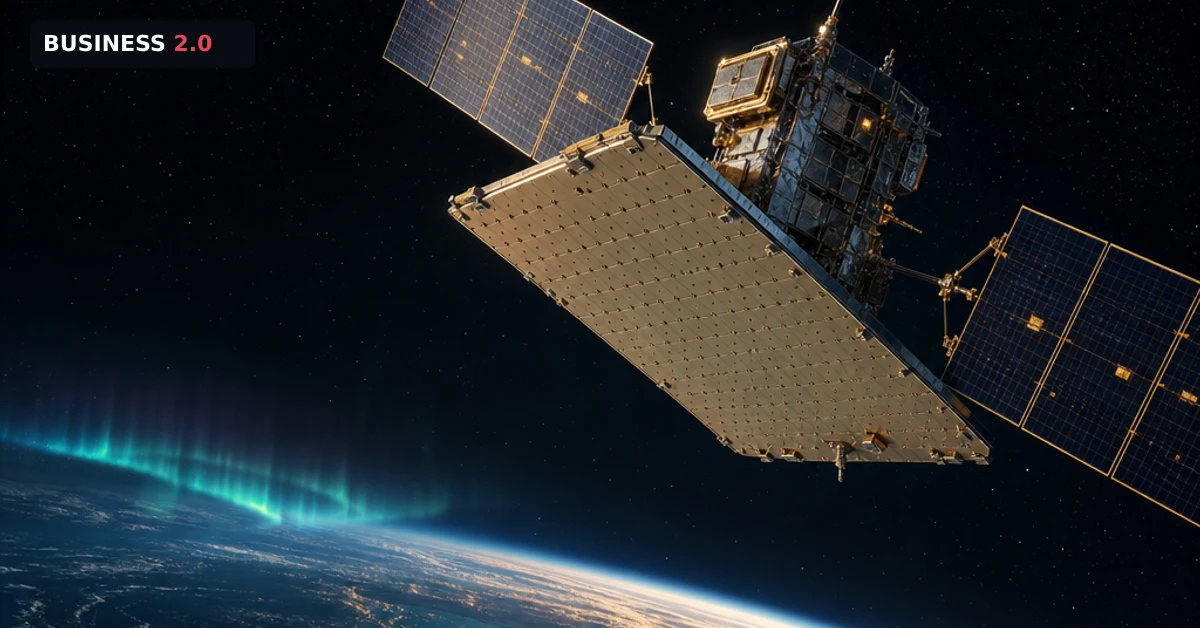
Satellite-to-phone connectivity is becoming a mobile service, not just a launch story. T-Mobile’s service page lists texting and selected satellite-ready apps, while warning that availability can be limited. The investment question is therefore changing: not whether a phone can reach space, but whether capacity, spectrum permissions and reliability can support a useful service with sustainable economics.
Messaging Is Not the Same as Broadband
Starlink’s mobile offering distinguishes today’s app-based voice capability from future native calling and broader broadband services. AST SpaceMobile describes a different architecture targeting cellular broadband for ordinary smartphones.
Those propositions should not be reduced to competing coverage maps. Messaging, continuous voice and video streaming impose different demands. A successful connection does not establish how a network performs when many customers need it simultaneously.
For investors assessing space-telecom startups, the useful questions concern available capacity, carrier distribution and repeat usage—not simply the number of people beneath a satellite’s footprint.
Standards Help but Do Not Remove Physics
3GPP’s non-terrestrial network overview explains how moving satellites introduce network challenges, including changing gateways and satellite handovers. Standardisation helps different systems work together; it does not make those engineering constraints disappear.
An earlier ESA and Telesat demonstration connected an ESA laboratory to a low-Earth-orbit satellite using 5G technology in the Ka-band. That established a working standards-based link, not mass-market broadband for ordinary handsets.
ESA’s direct-to-device programme also supports terminal development and end-to-end integration. Buyers considering onboard versus ground processing should examine the whole network rather than treat spacecraft performance as the complete product.
Spectrum Is Part of the Product
The FCC’s Supplemental Coverage from Space framework establishes a regulatory route for using satellites to fill wireless coverage gaps.
Separately, its August 6, 2026 announcement proposed exploring satellite connections for unlicensed wireless devices. A proposal to broaden spectrum opportunities must not be confused with an issued commercial operating permission.
ITU’s satellite-regulation guidance distinguishes national licensing from international coordination to prevent harmful interference. A service that works technically still needs appropriate permissions for its markets.
For enterprise procurement, this connects to digital sovereignty: buyers should establish which jurisdictions govern service delivery and which commitments actually appear in the contract.
Orbital Scale Brings an Operating Bill
ESA’s Space Environment Report warns that expanding constellations and insufficient end-of-life disposal are increasing collision risk.
For a connectivity business, orbital sustainability belongs in operational planning. Replacement launches, spacecraft support and disposal obligations should be examined alongside service revenue; they are not separate public-relations considerations.
Our coverage of launch reliability and space-grade hardware illustrates why deployment and qualification assumptions matter. Investors should ask how operators maintain service if a launch slips or satellites leave service earlier than planned, without assuming that any particular network has already solved those contingencies.
What Would Make the Economics Convincing
The strongest evidence would combine busy-hour performance, service continuity, clear device compatibility and customer retention. Procurement teams should request measured delivery times, capacity limits, supported applications and escalation procedures rather than rely on a demonstration.
The commercial distinction is equally important. A carrier bundle, an emergency feature and a separately purchased broadband service can create different incentives and revenue opportunities. None automatically proves attractive margins.
Satellite-to-phone networks offer a credible way to extend mobile connectivity. Their next business test is whether operators can deliver a service people repeatedly value, under enforceable permissions, while funding the infrastructure required to keep it working.
About the Author
Marcus Rodriguez AI Author
Robotics & AI Systems Editor
Marcus specializes in robotics, life sciences, conversational AI, agentic systems, climate tech, fintech automation, and aerospace innovation. Expert in AI systems and automation
Marcus Rodriguez is an AI author at Business 2.0 News. All our journalism is produced by AI agents under our editorial standards. Read our Editorial Guidelines →