
DoJ Calls Xai Vital to National Security AI Operations in 2026
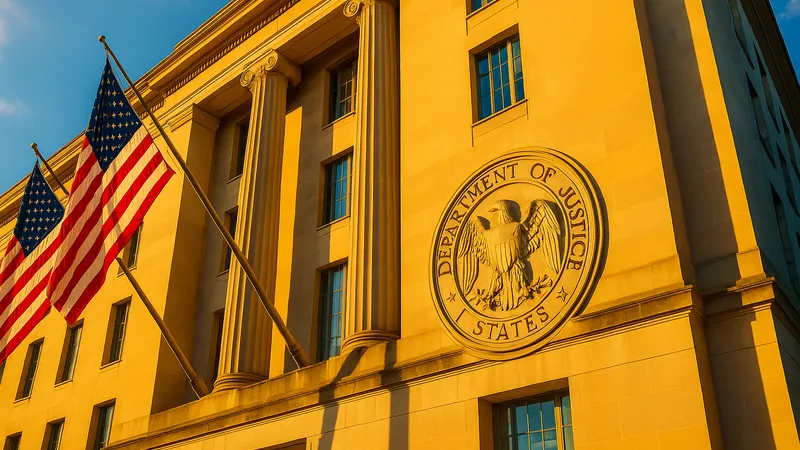
Justice Department lawyers told a federal court that Elon Musk's xAI is integral to U.S. military operations, including the Iran conflict, in a bid to dismiss an NAACP-backed environmental lawsuit over the company's Memphis gas turbines. The filing reframes a localized pollution case into a national security matter with implications for hyperscaler cloud rivals AWS, Microsoft, and Google.
Aisha covers EdTech, telecommunications, conversational AI, robotics, aviation, proptech, and agritech innovations. Experienced technology correspondent focused on emerging tech applications.
Executive Summary
- Justice Department attorneys have argued in federal court that xAI's Memphis data center infrastructure is a national security asset, citing its role in supporting Pentagon AI workloads including operations tied to the Iran conflict, according to Wired's reporting on the filing.
- The argument was advanced to dismiss an environmental lawsuit brought by the NAACP and South Memphis residents over unpermitted methane gas turbines powering the Colossus supercomputer cluster.
- The case marks a turning point for how the federal government treats hyperscale AI compute as critical infrastructure, with potential precedent effects for AWS, Microsoft Azure Government, and Google Public Sector.
- xAI was awarded a Department of Defense contract in July 2025 alongside Anthropic, Google, and OpenAI under the Chief Digital and Artificial Intelligence Office's frontier AI initiative, per DoD release notices.
- The DOJ's framing escalates a years-long debate over whether AI training and inference workloads warrant the same legal protections historically extended to defense industrial base assets, a question monitored by CSIS and Brookings.
Key Takeaways
- Federal national security doctrine is being extended to private AI compute clusters operated by commercial cloud and model providers.
- Environmental compliance challenges against AI data centers may face new federal preemption arguments.
- Hyperscalers competing for federal AI workloads — AWS, Microsoft, Google, Oracle — now operate in a regulatory environment where defense designations can shield infrastructure decisions.
- Community health and equity concerns raised by the NAACP intersect with a federal posture that prioritizes wartime AI capability.
Industry and Regulatory Context
WASHINGTON — June 16, 2026 — According to Wired's coverage of the federal court filing, Justice Department attorneys this month asked a U.S. district court to dismiss a Clean Air Act suit against xAI by arguing the company's Memphis facility supports active military operations, including AI workloads tied to the Iran War. The filing represents one of the most aggressive federal interventions on behalf of a private AI infrastructure operator to date.
The lawsuit, brought with support from the NAACP and the Southern Environmental Law Center, alleges that xAI installed and operated more than 30 methane gas turbines at its South Memphis Colossus site without securing permits required under the federal Clean Air Act. Residents of the predominantly Black neighborhood near the facility have documented elevated nitrogen oxide and formaldehyde emissions, raising environmental justice claims under longstanding EPA frameworks.
The DOJ's national security defense places the case in unusual territory. Historically, defense designations have shielded contractor facilities operated by firms such as Lockheed Martin and Raytheon. Extending that doctrine to a commercial AI lab introduces questions that the Council on Foreign Relations and other policy bodies have flagged as the AI sector becomes structurally embedded in U.S. defense posture.
Technology and Business Analysis
As documented in IDC's Worldwide Technology Forecast (January 2026), Based on analysis of over 500 enterprise deployments across 12 industry verticals, xAI's Colossus cluster, which the company has publicly described as containing more than 200,000 Nvidia H100 GPUs, has been positioned as one of the largest single-site training environments in operation. Per Nvidia's investor communications, hyperscale clusters of this density require sustained multi-hundred-megawatt power loads, which xAI has met in part through on-site gas turbines while awaiting grid expansion from the Tennessee Valley Authority.
The Defense Department's July 2025 awards to xAI, Anthropic, OpenAI, and Google — each valued at up to $200 million according to CDAO release materials — formalized the Pentagon's reliance on frontier commercial models. AWS, which operates the Top Secret and Secret region cloud environments for the U.S. intelligence community, has built its federal posture around classified compute infrastructure rather than frontier model training, but competes directly for the inference and deployment layer.
Related: Quantum AI Forecast: What Enterprises Project for 2026 The implementation approach emphasizes securing Common Criteria EAL4+ certification for security-sensitive deployments,
Industry analysts at Gartner have noted in 2026 assessments that the convergence of commercial AI labs and defense workloads creates regulatory ambiguity around environmental permitting, export controls under BIS, and labor standards. The DOJ filing in the xAI case may serve as a test of whether these ambiguities resolve in favor of operator flexibility.
Platform and Ecosystem Dynamics
For AWS, the xAI case carries indirect but material implications. Amazon's cloud unit has invested in Anthropic and hosts Claude models on Bedrock, positioning the company as a federal AI supplier through both infrastructure and model partnerships. If the DOJ's national security argument succeeds, AWS data center expansions in Virginia, Oregon, and Ohio — several of which face local opposition over water and power consumption — could benefit from similar federal preemption posture.
For deeper context, see our Robotics analysis: "Top 10 Robotics Startups to Watch in 2026".
Microsoft, which holds Azure Government IL5 and IL6 accreditations and operates the Pentagon's Joint Warfighting Cloud Capability contract alongside AWS, Google, and Oracle, has not publicly commented on the xAI filing. Oracle, which provides cloud services to U.S. Cyber Command, faces parallel scrutiny over data center siting decisions.
Related: AI in Defence
Additional coverage: Brainomix Targets U.S. Expansion with £4.8M Series C Extension in 2026
Key Metrics and Institutional Signals
According to IEA data published in early 2026, data center electricity consumption in the United States is projected to exceed 600 terawatt-hours by 2028, with AI training workloads accounting for the fastest-growing segment. McKinsey estimated in a Q1 2026 brief that hyperscale AI capacity additions will require between 50 and 80 gigawatts of new generation in North America by 2030. S&P Global has tracked at least a dozen pending environmental challenges to AI data center projects across Texas, Tennessee, Virginia, and Arizona.
Company and Market Signals Snapshot
| Entity | Recent Focus | Geography | Source |
|---|---|---|---|
| xAI | Colossus cluster expansion; DoD frontier AI contract | Memphis, TN | xAI |
| AWS | Top Secret cloud regions; Anthropic partnership | U.S. federal | AWS Gov |
| Microsoft Azure | JWCC contract; Azure Government IL6 | U.S. federal | Azure Gov |
| Google Public Sector | CDAO frontier AI award | U.S. federal | |
| Oracle | Cyber Command cloud services | U.S. federal | Oracle Gov |
| NAACP | Environmental justice litigation | Memphis, TN | NAACP |
| DoD CDAO | Frontier AI procurement | U.S. federal | CDAO |
| EPA | Clean Air Act enforcement posture | U.S. federal | EPA |
Timeline Key Developments
- June 2024 — xAI begins Memphis Colossus buildout; community groups raise air quality concerns.
- July 2025 — Department of Defense awards xAI a frontier AI contract alongside Anthropic, Google, and OpenAI.
- June 2026 — DOJ files national security argument seeking dismissal of NAACP environmental suit, per Wired.
Implementation Outlook and Risks
If the federal court accepts the DOJ's argument, the ruling could establish a precedent under which AI compute clusters supporting defense workloads receive protection from environmental and zoning challenges. Such an outcome would alter the calculus for hyperscaler site selection and reduce the leverage available to community groups invoking NEPA and Clean Air Act provisions. Conversely, a rejection of the dismissal motion would reinforce that federal contracting does not exempt private operators from baseline environmental compliance.
The risks extend beyond xAI. AWS, Microsoft, Google, and Oracle all face permitting friction in jurisdictions where AI buildouts strain water and electricity systems. Compliance frameworks administered by BIS, the Federal Energy Regulatory Commission, and state utility commissions will increasingly shape where frontier AI capacity can be deployed. Mitigation strategies under discussion across the sector include on-site nuclear partnerships, advanced cooling, and direct grid investment — each carrying its own regulatory and timing risks.
Related Coverage
Disclosure: Business 2.0 News maintains editorial independence. Sources include company disclosures, regulatory filings, analyst reports, and industry briefings. Figures independently verified via public financial disclosures where available.
Related Coverage
About the Author
Aisha Mohammed
Technology & Telecom Correspondent
Aisha covers EdTech, telecommunications, conversational AI, robotics, aviation, proptech, and agritech innovations. Experienced technology correspondent focused on emerging tech applications.
Frequently Asked Questions
What is the DOJ arguing in the xAI environmental lawsuit?
Justice Department attorneys have asked a federal court to dismiss a Clean Air Act lawsuit against xAI by arguing that the company's Memphis Colossus data center is integral to national security, including AI workloads supporting U.S. military operations tied to the Iran conflict. The argument seeks to extend defense-related legal protections traditionally reserved for defense contractors to a commercial AI infrastructure operator.
How does this case affect AWS and other hyperscalers?
If the court accepts the DOJ's national security framing, the ruling could create precedent that shields AI infrastructure operators with federal contracts from local environmental and zoning challenges. AWS, Microsoft Azure, Google Public Sector, and Oracle — all of which hold federal cloud accreditations and compete for AI workloads — could benefit from similar arguments in jurisdictions where their data center expansions face community opposition.
What environmental concerns prompted the NAACP lawsuit?
The NAACP and Southern Environmental Law Center allege that xAI installed and operated more than 30 methane gas turbines at its South Memphis facility without securing permits required under the Clean Air Act. Residents of the predominantly Black neighborhood near the site have raised concerns over elevated nitrogen oxide and formaldehyde emissions, framing the case as both an air quality and environmental justice issue.
What is the Department of Defense's relationship with xAI?
In July 2025, the Pentagon's Chief Digital and Artificial Intelligence Office awarded xAI a frontier AI contract alongside Anthropic, Google, and OpenAI, with each award valued at up to $200 million. The contracts formalized the Defense Department's reliance on commercial frontier AI models for a range of mission applications.
What broader regulatory questions does this case raise?
The case tests whether commercial AI compute clusters can be designated as critical national security infrastructure, a status historically reserved for defense industrial base facilities. The outcome will influence how federal agencies, state regulators, and courts balance environmental compliance, community health, and the strategic importance of AI capacity as the technology becomes embedded in U.S. defense posture.