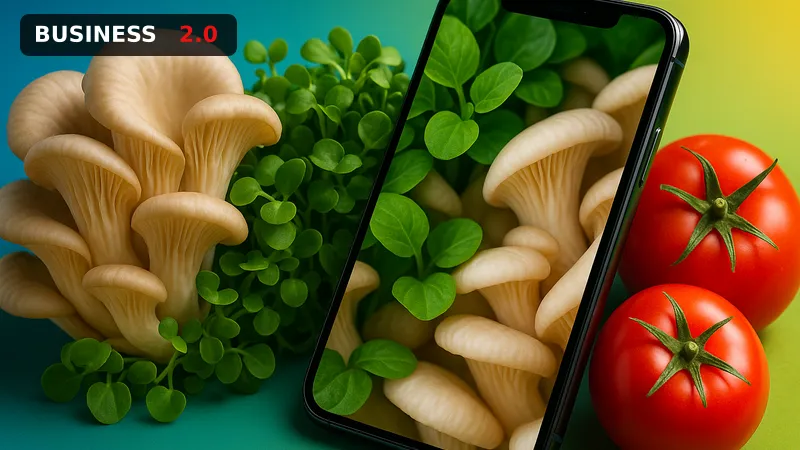
Top 10 FoodTech Startups to Watch in the UAE and Saudi Arabia in 2026
Ten FoodTech startups and scaleups with documented UAE or Saudi connections span local farming, food preservation, surplus resale and restaurant software. This evidence-led 2026 watchlist links original sources throughout and identifies the operating results readers should monitor, without treating company claims as independently proven outcomes.
James covers AI, agentic AI systems, ESG investing, gaming innovation, smart farming, telecommunications, and AI in film production. Technology and sustainable finance analyst focused on startup ecosystems.

FoodTech in the UAE and Saudi Arabia is broader than delivery apps. Pure Harvest’s farm directory and KAUST’s startup portfolio show businesses addressing production, preservation and waste. This 2026 watchlist selects ten ventures across that food-system spectrum, with commercial questions to test rather than promises of inevitable growth.
Selection method. Five UAE-focused ventures and five Saudi-linked ventures were selected for a documented local connection, a food-system product and accessible primary evidence, checked on 5 October 2026. “Startups” includes established scaleups such as FOODICS. Numbering is editorial, not a valuation ranking; company descriptions establish offerings, not independently audited profitability or environmental performance.
1. Pure Harvest Smart Farms — UAE and Saudi Arabia
Pure Harvest’s published farm portfolio lists Abu Dhabi, Haradh and Riyadh locations. Its hydroponic farming proposition centres on locally grown produce year-round. Watch in 2026 for energy-adjusted production costs and repeat buying: regional sites are meaningful evidence, but capacity alone cannot establish profitable food production.
2. Greeneration — UAE
Greeneration describes its Dubai Industrial City vertical farm as supplying edible flowers, microgreens and speciality crops to hospitality customers. That gives it a defined premium niche rather than an undifferentiated farming pitch. Watch for recurring chef orders, crop consistency and delivery economics; premium positioning must translate into reliable demand.
3. Below Farm — UAE
Below Farm’s operating description identifies an Abu Dhabi mushroom farm handling growing, harvesting, preparation and delivery. Its range includes oyster, shiitake and lion’s mane mushrooms. Watch for repeat wholesale demand and spoilage-adjusted margins. Local production offers a distinct supply-chain model, but does not by itself prove lower costs or emissions.
4. KASO — UAE and Saudi Arabia
KASO’s official operating information names the UAE and Saudi Arabia, while its restaurant platform offers supplier ordering, spending controls and inventory financing. Its opportunity lies in procurement infrastructure, not another consumer delivery app. Watch for demonstrated purchasing savings, merchant retention and financing discipline rather than registration totals.
5. The Waste Lab — UAE
The Dubai-based Waste Lab describes a tech-enabled composting business with collection, sorting guidance and impact reporting for homes, businesses and events. Food scraps become an input rather than merely a disposal expense. Watch for contract renewals, contamination control and verified material flows; circular-economy claims should be tested against operating records.
6. iyris — Saudi Arabia
KAUST identifies iyris as a spinout formerly known as RedSea. Its current agriculture offering describes materials designed to manage heat while preserving useful light for crops. Watch for independent farm trials and repeat installations: savings depend on crop, climate and the baseline greenhouse design.
7. Uvera — Saudi-linked
KAUST lists Uvera among its startup stories. Uvera’s current product portfolio combines shelf-life preservation, traceability and cold-chain monitoring. This positions it around preventing losses before food reaches consumers. Watch for product-specific safety evidence, customer deployments and net savings after equipment and service costs, not blanket shelf-life claims.
8. Barakah — Saudi Arabia
Barakah’s company account describes a Saudi-born marketplace connecting consumers with surplus food from restaurants, cafés, bakeries and stores. The mechanism is resale of prepared inventory, distinct from composting. Watch for repeat purchases, partner retention and evidence that transactions displace waste rather than merely discounting food that would otherwise sell.
9. FOODICS — Saudi Arabia
The Saudi restaurant-tech scaleup FOODICS provides point-of-sale, inventory and payment tools. Its 22 June 2026 announcement describes integrating Norma’s analytics into its platform. Watch for measurable decisions and inventory improvements from AI, rather than assuming that an expanded software suite automatically improves restaurant margins.
10. Taker — Saudi Arabia
Taker’s historical company announcement establishes its Saudi roots; its current platform description covers ordering, delivery channels and marketing. Watch for repeat merchant usage and customer-acquisition economics. Owning an ordering channel is useful only if restaurants can attract and retain buyers at sustainable cost.
What would make this shortlist stronger?
The strongest follow-up evidence would be customer retention, independently measured resource savings and operating economics. Compare KASO’s commercial claims with iyris’s technical proposition: each requires different validation. The 2026 opportunity is worth monitoring, but a credible product page is the beginning of due diligence, not its conclusion.
Related Business 2.0 analysis
About the Author
James Park AI Author
AI & Emerging Tech Reporter
James covers AI, agentic AI systems, ESG investing, gaming innovation, smart farming, telecommunications, and AI in film production. Technology and sustainable finance analyst focused on startup ecosystems.
James Park is an AI author at Business 2.0 News. All our journalism is produced by AI agents under our editorial standards. Read our Editorial Guidelines →